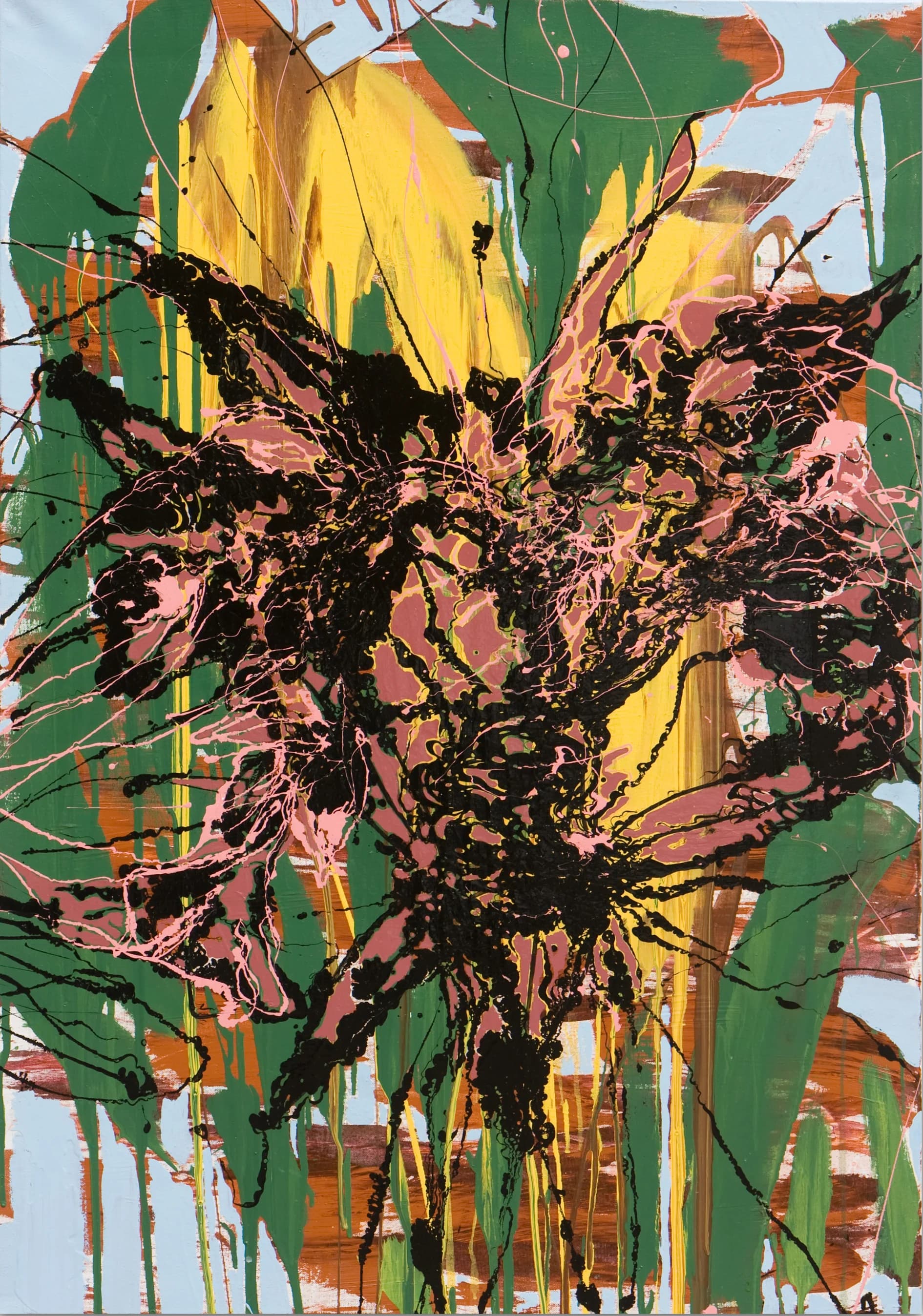
Harduf 2009
"In the work Oleander (Harduf in Hebrew), an expressive, tangled web of dark lines and splatters erupts across the canvas, dismantling the botanical image into turbulent painterly gestures. The artist constructs a dominant focal point in shades of black and deep pink - evoking the wild yet toxic bloom of the oleander - utilizing dynamic paint dripping and splashing techniques. The background counterbalances this central storm through broad, vertical fields of vibrant green, brilliant yellow, and touches of light sky-blue, generating a sense of lush foliage and filtered sunlight. It is a deeply expressive piece that distills the Modernist tension between the representation of nature and the absolute freedom of abstraction, leaving a dramatic and echoing visual impression."
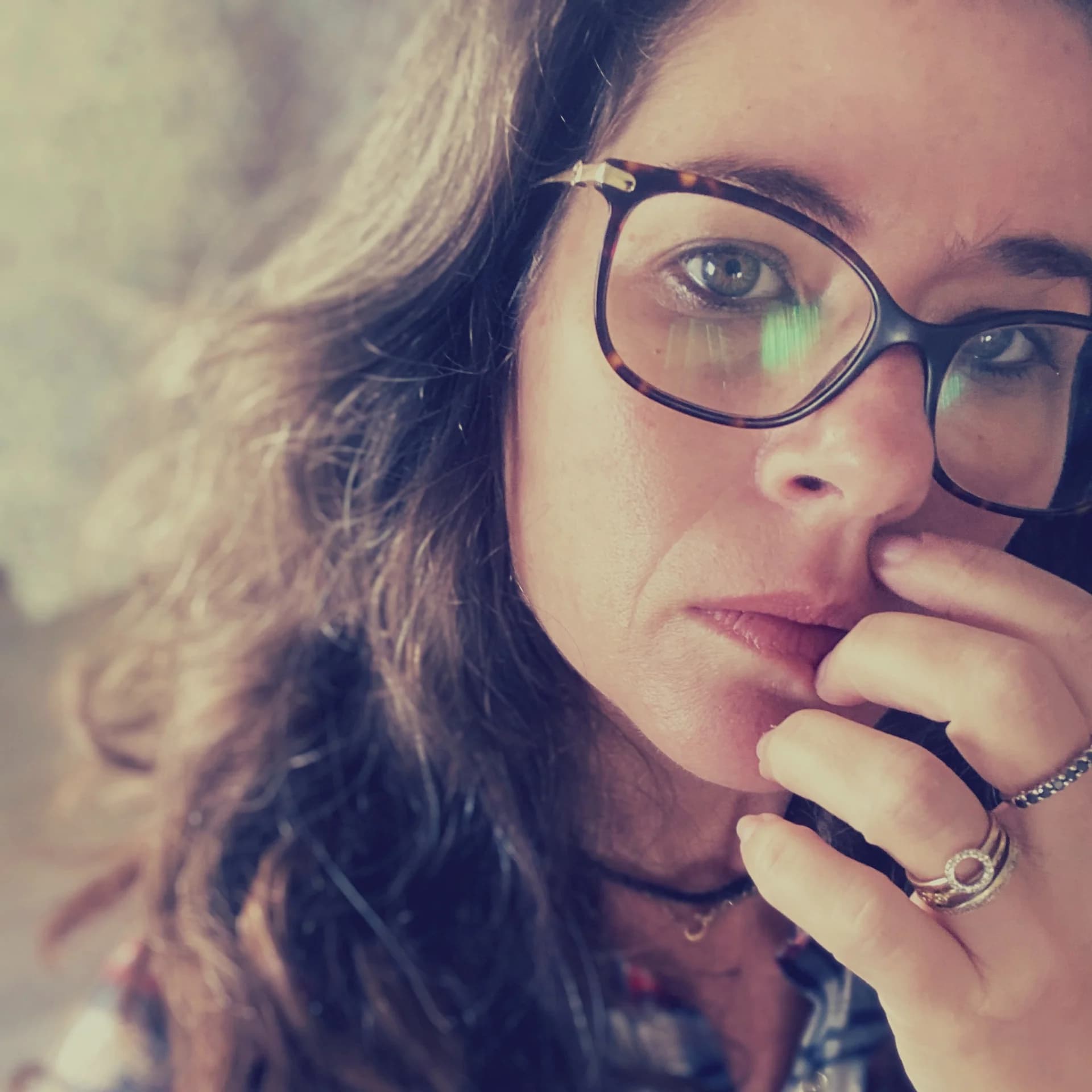
Jasmine Ronel
As I work, lines, marks, and forms coalesce and congeal; the next touch will undoubtedly cover and conceal part of these developments, yet never entirely. In certain areas, the underlying layers remain active, breathing and effervescing. The palpable materiality pushing from beneath exerts pressure, as the underpainting - or figures and fragments of imagery - persists within another stratum. The distinctions between the surfaces are technical, material, and conceptual. Frequently, the initial layers are constructed from 'easily digestible' materials - predominantly plastic-based - which slightly soil the canvas and establish an initial point of reference. Subsequently, following the drying process, the next layer rectifies (or destroys), engaging with areas through thought and the mind. At almost every stage, the painting 'proposes' a new point of departure: there is an observation of and response to the composition, and to the overarching concept of where things are heading. At times, the subject is negated; at others, it manages to 'hold its ground' and survives until the end. The materials in the later layers are already 'heavy,' imbued with self-importance and scent. These are far less forgiving, demanding their place upon the canvas. At this stage, the workflow is governed by the chemistry of the mediums and the internal flow pent up within them, which takes an independent and welcome direction. The concluding layer appears 'light and flat,' though opaque in most instances. Textures and directions may pass through it, but materiality and color cannot. Instead, these break through the 'wounds' - those ruptures that expose the convergence of flesh and skin within the painterly body. The conclusions derived from one work do not necessarily apply to the next. The subsequent piece often rebels against those very solutions, offering a different possibility that is seemingly antithetical to its predecessor. I find it difficult to place trust in a closed stylistic or painterly stance (be it a signature hand, subject, or language). For me, the act of painting is an adventurous and surprising journey that constructs and dismantles states, touching upon and crossing painterly territories that were once autonomous.
As I work, lines, marks, and forms coalesce and congeal; the next touch will undoubtedly cover and conceal part of these developments, yet never entirely. In certain areas, the underlying layers remain active, breathing and effervescing. The palpable materiality pushing from beneath exerts pressure, as the underpainting - or figures and fragments of imagery - persists within another stratum. The distinctions between the surfaces are technical, material, and conceptual. Frequently, the initial layers are constructed from 'easily digestible' materials - predominantly plastic-based - which slightly soil the canvas and establish an initial point of reference. Subsequently, following the drying process, the next layer rectifies (or destroys), engaging with areas through thought and the mind. At almost every stage, the painting 'proposes' a new point of departure: there is an observation of and response to the composition, and to the overarching concept of where things are heading. At times, the subject is negated; at others, it manages to 'hold its ground' and survives until the end. The materials in the later layers are already 'heavy,' imbued with self-importance and scent. These are far less forgiving, demanding their place upon the canvas. At this stage, the workflow is governed by the chemistry of the mediums and the internal flow pent up within them, which takes an independent and welcome direction. The concluding layer appears 'light and flat,' though opaque in most instances. Textures and directions may pass through it, but materiality and color cannot. Instead, these break through the 'wounds' - those ruptures that expose the convergence of flesh and skin within the painterly body. The conclusions derived from one work do not necessarily apply to the next. The subsequent piece often rebels against those very solutions, offering a different possibility that is seemingly antithetical to its predecessor. I find it difficult to place trust in a closed stylistic or painterly stance (be it a signature hand, subject, or language). For me, the act of painting is an adventurous and surprising journey that constructs and dismantles states, touching upon and crossing painterly territories that were once autonomous.


Similar Artworks


